How fast does mold actually grow after water damage?
Mold spores are already in your home right now. They are in the air, on your shoes, in the dust on your blinds. They only need three things to bloom into a visible colony: moisture, a food source like drywall paper or wood, and temperatures between 60 and 80 degrees. Your Center Grove home meets two of those conditions every day. Add water, and the clock starts. Visible growth typically appears at the 48 to 72 hour mark, but microscopic colonization begins within 24 hours. By day four or five, you will often smell it before you see it, that musty, earthy odor coming from baseboards or carpet pad. This is why same day water damage service matters more than people realize. Every hour of standing water or saturated drywall is an hour mold gets to establish itself.
Is the mold in my home dangerous or just ugly?
Both answers can be true. Most common indoor molds, including the cladosporium and penicillium species we find most often in Center Grove basements, cause allergy symptoms, sinus irritation, headaches, and asthma flare ups. Stachybotrys, the species people call black mold, produces mycotoxins that can cause more serious respiratory issues, especially for infants, elderly residents, and anyone with a compromised immune system. We do not diagnose health effects. That is your doctor's job. What we can tell you is that any visible growth larger than a square foot, any musty smell that does not go away with cleaning, or any growth combined with respiratory symptoms in the household is a reason to stop, leave it alone, and call a professional for assessment.
How much does mold remediation cost in Center Grove?
Pricing varies based on square footage, materials involved, and how deep the colonization runs. For most Center Grove homes, small contained jobs under 10 square feet run roughly 500 to 1,500 dollars. Mid sized jobs involving a section of basement wall, a bathroom, or under a kitchen cabinet generally fall between 2,000 and 6,000 dollars. Whole basement or multi room remediation with significant demolition can run 10,000 to 25,000 dollars or higher when HVAC contamination is involved. If the underlying cause was a sudden covered event like a burst supply line, your homeowners policy will often pay for both the water mitigation and the mold remediation it caused. Long term leaks, deferred maintenance, and groundwater seepage are typically excluded. We help you document the cause so the claim has the best chance of approval.
What can I do to prevent mold from coming back?
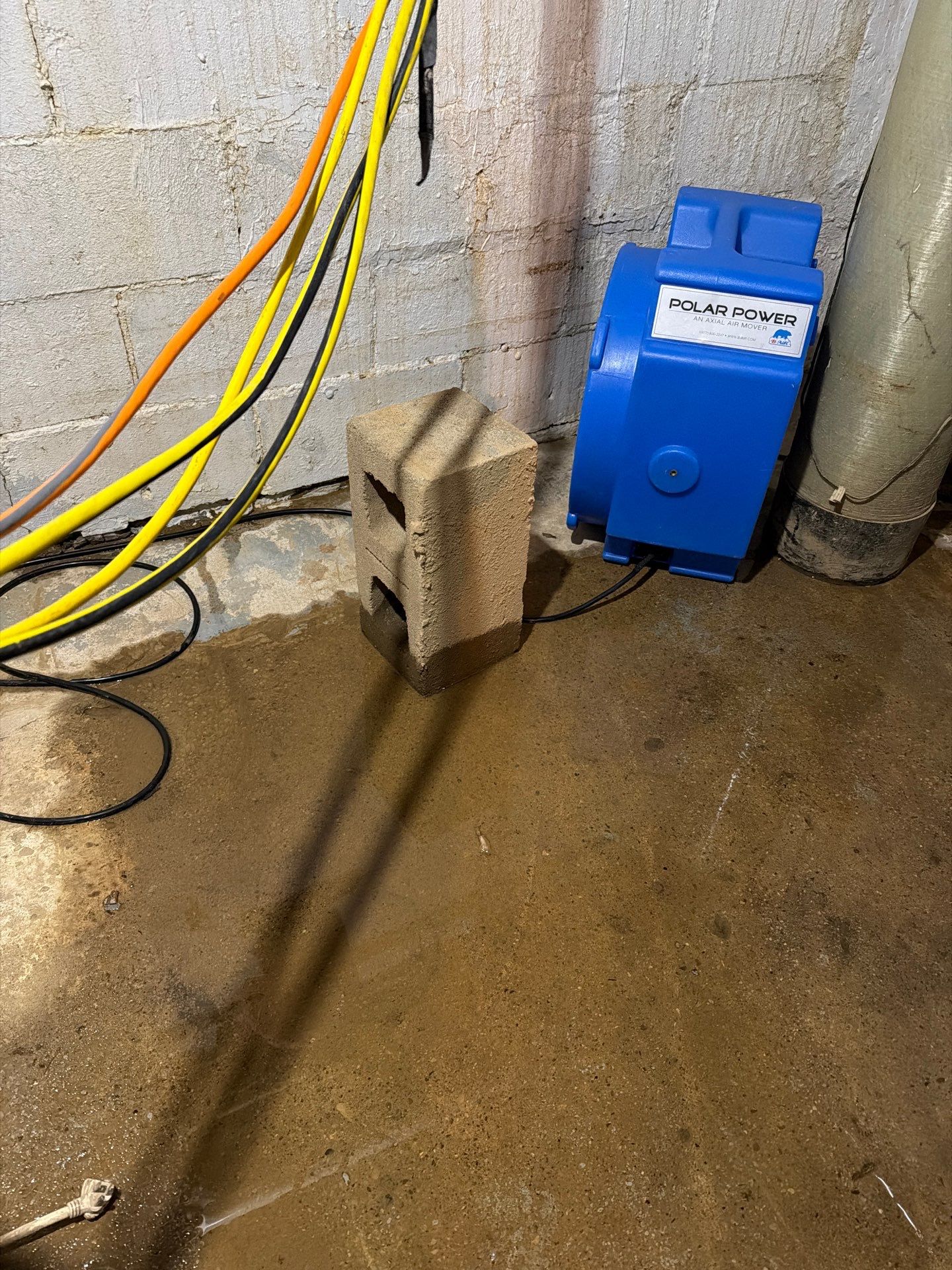
Prevention in Central Indiana comes down to controlling humidity and reacting to water fast. Keep indoor relative humidity between 30 and 50 percent year round, which usually means running a dehumidifier in the basement from May through September. Fix small leaks the day you notice them, not the weekend you finally have time. Check washing machine hoses, water heater pans, refrigerator lines, and under sink supply lines twice a year. If you have a sump pump, test it before every spring storm season and consider a battery backup. After any water event, even a small one, dry the area within 24 hours using fans and a dehumidifier, and pull up wet carpet pad rather than hoping it dries in place. Pay attention to the spots most Center Grove homeowners forget: the rim joist behind finished basement walls, the back of bathroom vanities, the inside of exterior wall closets, and the attic around bath fan exhaust terminations. A cheap hygrometer in the basement and another upstairs will tell you more about your mold risk than almost any other tool. For larger events, our water damage restoration team can be onsite in Center Grove the same day with truck mounted extraction and commercial drying equipment.
When should I call a professional instead of handling it myself?
Call us if the affected area is larger than 10 square feet, if the mold is inside HVAC ductwork, if anyone in the home has respiratory issues, if the water source was sewage or flood water, or if you simply do not know how far the moisture traveled. We do free assessments for Center Grove homeowners, and if your situation is small enough to DIY safely, we will tell you that on the spot and walk you through the right approach.
Can I just clean it with bleach and move on?
Bleach is one of the most misunderstood products in mold cleanup. On a hard, nonporous surface like glazed tile or sealed countertop, diluted bleach will kill surface mold. On porous materials, which is most of your home, bleach is mostly water and the water actually feeds the mold deeper into the substrate. Drywall, wood framing, insulation, carpet pad, and ceiling tiles cannot be saved with a spray bottle. They have to be removed, bagged, and replaced. We see Center Grove homeowners spend a weekend scrubbing walls only to watch the same black spots return three weeks later, because the colony was rooted in the back side of the drywall the whole time. The same applies to most off the shelf mold sprays. They are formulated to kill what you can see, not what has rooted into the gypsum core or wicked six inches up a stud. Painting over a stain with mold resistant primer is even worse, because it traps active growth behind a sealed surface where it continues to feed on the paper backing and release spores into the wall cavity.
What does professional mold remediation actually involve?
Real remediation follows the IICRC S520 standard, and it looks nothing like a deep clean. We start by identifying the moisture source and stopping it. Remediation without fixing the leak is wasted money. Next we set up containment using 6 mil poly sheeting and negative air pressure so spores do not migrate into clean parts of your Center Grove home while we work. HEPA air scrubbers run throughout the project. Affected porous materials get cut out, double bagged, and removed. Structural wood gets HEPA vacuumed, treated with an EPA registered antimicrobial, and in some cases mechanically sanded. We dry the cavity to under 16 percent moisture content before anything gets closed back up. Finally we recommend post remediation verification, which is third party air and surface testing to confirm spore counts are back to normal range. If the original cause was a flooded basement, we usually coordinate with our basement flooding cleanup team so the moisture problem and the mold problem get solved together.
What should I expect during the project itself?
Most residential remediations at Center Grove Water Restoration take between two and five working days, depending on demolition scope and how quickly materials dry. You will see technicians in Tyvek suits, P100 respirators, and nitrile gloves entering through a zippered containment door. Expect some noise from air scrubbers, which run continuously, and expect the affected room to be off limits until clearance testing comes back clean. We photograph every stage, log moisture readings daily, and provide a written scope so you and your insurance adjuster have a clear paper trail from start to finish.